
Do you know who your neighbours are? The couple next door? What are their names? What do they do?
We live in the most technologically advanced age in human history, so far. Never before have we had so many ways to communicate with one another. We went from postal letters and telegrams to operator-handled telephones, hands-free phones, international calls, and then to email, MSN Messenger, FaceTime, and Zoom. And today, social media platforms that allow us to speak to hundreds, sometimes thousands, of people instantly.
Communication has become immediate, accessible, and constant. And to be fair, there are genuine benefits. For me personally, one of the most beautiful aspects of social media is the ability to reconnect with people we thought we had lost forever. Childhood friends. Former classmates. Extended family members separated by migration, distance, or time. It has allowed people to rediscover their own history and reconnect with parts of their identity. That is valuable.
But while communication has expanded exponentially, something else has diminished.
Connection.
Real connection.
Meaningful conversation.
Community.
Belonging.
And I believe many of the cracks we now see in modern society are rooted in this growing disconnection from one another. Because, although we are constantly communicating, many of us are no longer truly relating.
A message is not necessarily a conversation.
A comment section is not necessarily a community.
And followers are not necessarily friendships.
Meaningful relationships are built differently. They are built slowly. Through repeated conversations. Shared meals, shared struggles. Shared routines, shared experiences.
Through eye contact.
Through presence.
Through simply existing beside one another consistently enough that trust forms naturally.
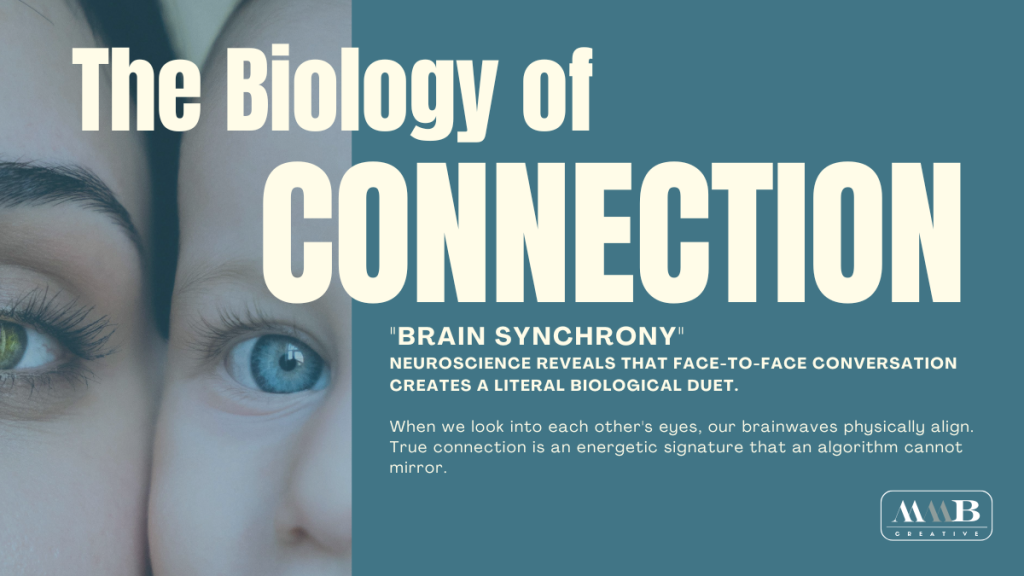
Neuroscientists call this “brain synchrony.” Research shows that when two people sit in a room and have a real, face-to-face conversation, their brainwave patterns physically align and mirror each other in real time. True connection is a literal biological duet. An algorithm can mirror our interests, but it can never mirror our minds. It requires physical presence.
Not long ago, communities functioned very differently. People knew their neighbours. They spoke regularly with the grocer, the butcher, the postmaster. Families visited one another without scheduling it weeks in advance through an app. Children played outside with other children from the street while parents watched over one another’s families collectively.
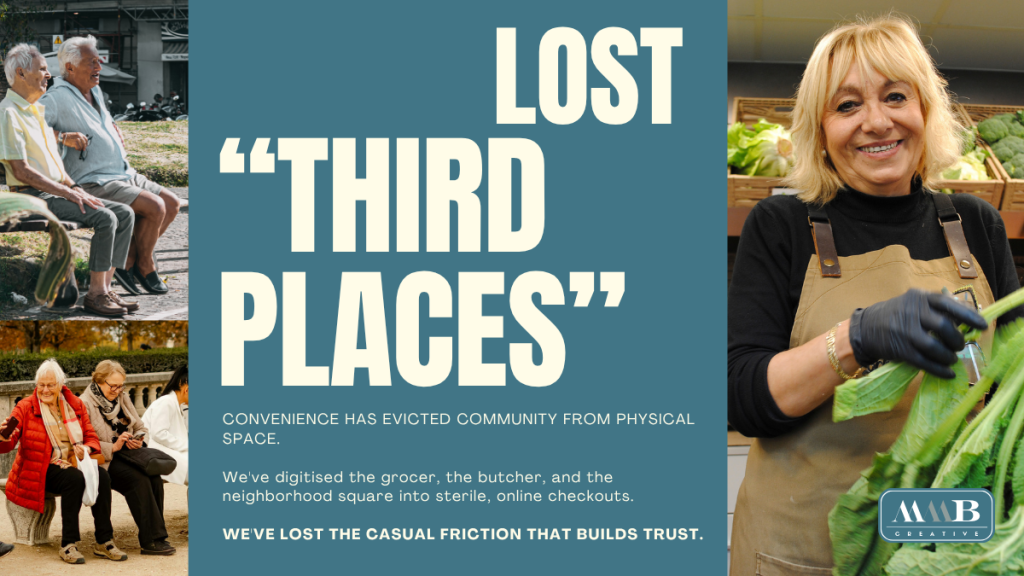
Sociologists call these spaces “Third Places.” Our first place is home; our second place is work. Third places are the anchors of community life: the local shops, the front porches, the neighbourhood squares where people gather naturally without a formal invitation.
Modern life, in the name of efficiency, has systematically digitised and destroyed these physical third places. Today, we shop online. Even when we go into shops, we often use self-checkouts. We communicate through screens more than through conversations.
And look at what it does to our most intimate spaces. Many families sit together physically while mentally existing somewhere else entirely, each person consumed by their own device.
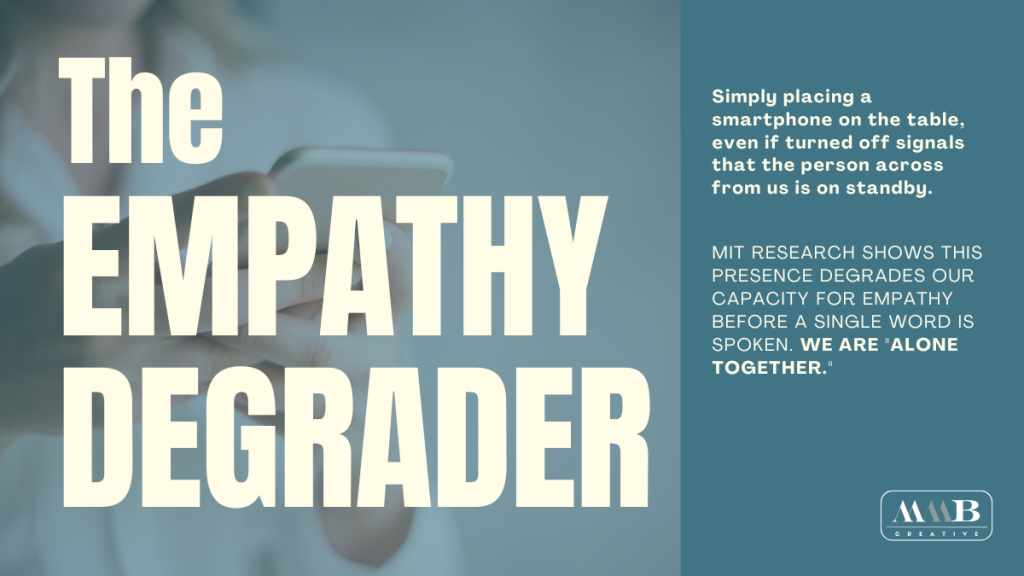
Researchers at MIT actually discovered that simply placing a smartphone on a dinner table, even if it is turned off and silent, signals to the person across from us that they are on standby. It actively degrades our capacity for empathy before a single word is even spoken.
We may live beside neighbours for years and never know their names. And while all of this may appear small individually, collectively it changes the emotional architecture of society.
Because human beings are NOT designed for prolonged emotional isolation.
We are relational beings.
We are communal by nature.
Anthropologists, psychologists, and sociologists have repeatedly shown that humans survive and thrive through social bonds, cooperation, and shared identity.
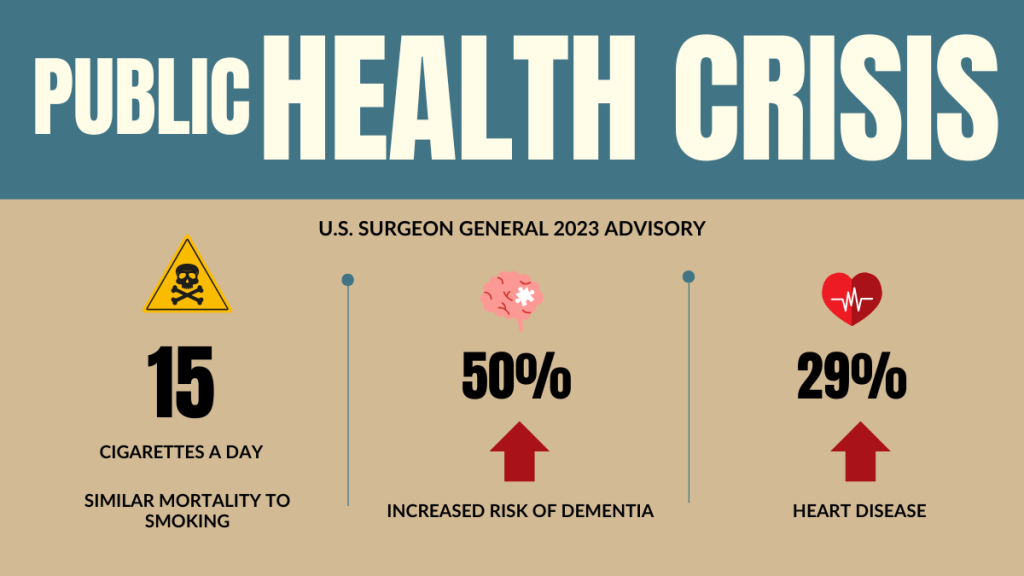
In 2023, the US Surgeon General described loneliness and social isolation as a public health epidemic, linking them to increased risks of depression, anxiety, cardiovascular disease, dementia, and premature death.
Think about that for a moment. We have the greatest communication systems humanity has ever invented, yet loneliness has become one of the defining emotional experiences of modern life.
That should concern us. Especially for younger generations.
Now, I want to be clear: Technology itself is not evil. Progress is good when managed properly. Social media is not entirely bad.
But we would be dishonest if we pretended there were no risks.
Social media is designed to capture attention. And attention has become one of the most profitable commodities on Earth. Algorithms influence perception. They influence desire. They influence identity formation. They influence what young people believe is valuable, beautiful, successful, or normal.
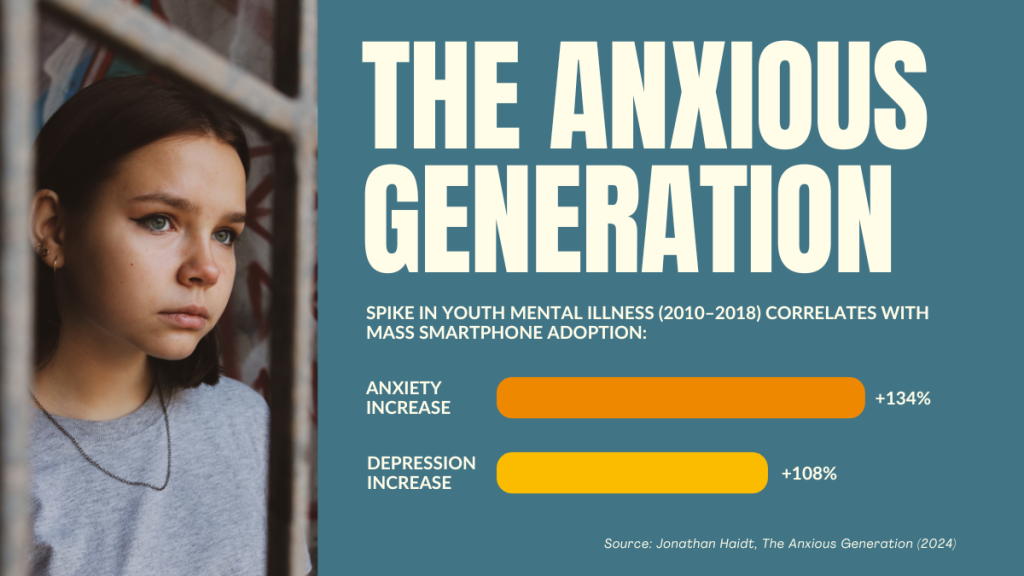
And for developing minds, that influence can be profound. Research increasingly shows associations between heavy social media use and rising levels of anxiety, loneliness, low self-esteem, sleep disruption, and psychological distress among young people.
Not because every teenager is weak. But because constant comparison distorts reality. A young person can spend hours consuming carefully curated versions of other people’s lives and start believing their own life is inadequate.
Their appearance is inadequate.
Their family is inadequate.
Their worth is inadequate.
And once identity becomes fragile, people become vulnerable.
Vulnerable to addiction.
Vulnerable to manipulation.
Vulnerable to extremism.
Vulnerable to disconnection from themselves and others. And when disconnection begins inside the home, eventually it ripples outward into communities and society itself.
Now, I am not saying social media directly causes knife crime, violence, or the breakdown of society. Human behaviour is far more complex than that.
But I am saying this: When people lose meaningful connection, accountability, guidance, identity, and belonging, families become fragmented and communities weaken. When we pull away from physical spaces, we lose the informal safety nets and community guardrails that historically kept despair and anti-social behaviour in check.
History repeatedly shows us that disconnected families become emotionally unstable societies. What happens in our homes extends into our communities. And what happens in our communities eventually shapes nations.
Which brings me to something I believe very deeply. This is not a “wonder drug” that solves the problem, but they matter far more than we realise:
Family stories.
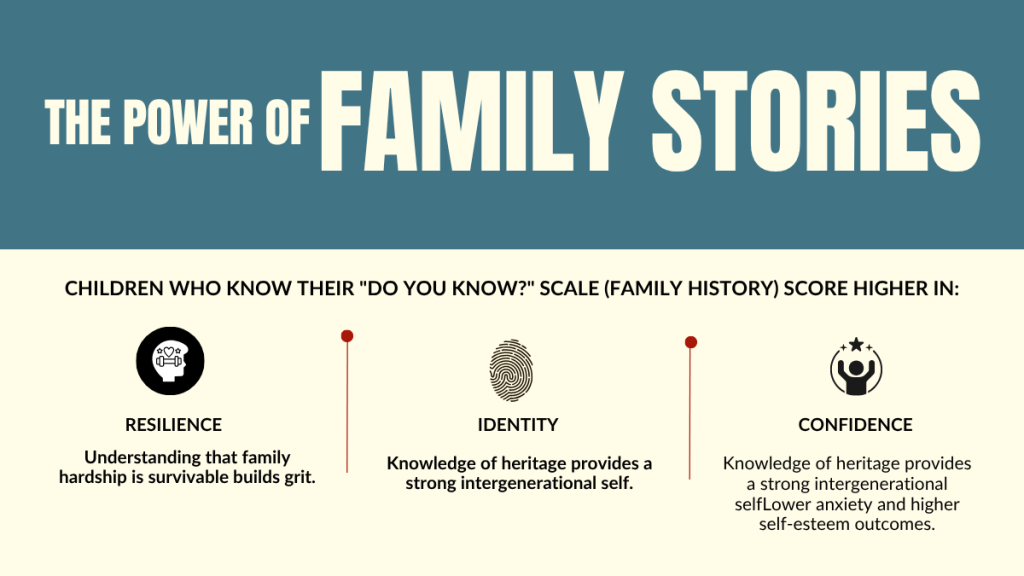
Research by psychologists Marshall Duke and Robyn Fivush found that children who knew more about their family history showed stronger emotional resilience, greater confidence, and a stronger sense of identity.
Why? Because knowing where you come from helps you understand who you are. When children know the struggles their forefathers survived, the sacrifices made by grandparents, the migrations, hardships, and triumphs that shaped their bloodline stories, they inherit something deeper than information.
They inherit perspective.
Strength.
Roots.
Belonging.
An understanding that hardship is survivable.
That they are part of something larger than themselves.
And perhaps this is what many people are truly starving for today: not more notifications. Not more content.
But meaning.
Belonging.
Human presence.
A sense that they are known. Seen. Anchored.
The tragedy is that modern society has become incredibly efficient at removing the very conditions that naturally produced those things. And now we are entering another era entirely.
Artificial intelligence.
AI will transform communication even further.
Businesses will automate conversations.
Content will increasingly be machine-generated.
Information will become faster, smarter, and more personalised than ever before.
AI absolutely has benefits.
But it also raises an uncomfortable question: What happens to human connection when even conversation itself becomes automated?
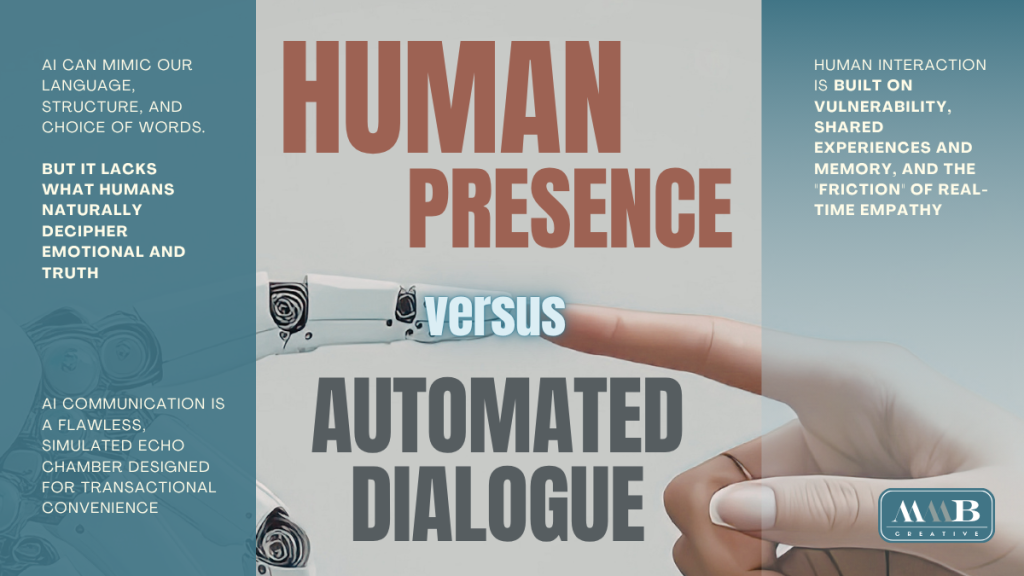
AI offers us a highly seductive promise: frictionless interaction.
An AI assistant is infinitely patient, always agreeable, and engineered never to lose its temper. But human relationships requirefriction. They require patience, forgiveness, and the clumsy, beautiful art of misunderstanding and making up. If we replace human messiness with digital perfection, we lose the very essence that makes us empathetic.
There is something uniquely human that technology still cannot replicate fully.
Human presence carries memory.
Emotion.
Nuance.
Shared experience.
An energetic signature shaped by lived reality.
Human beings recognise one another not simply through words, but through sincerity, vulnerability, imperfection, and emotional truth.
And perhaps this is where our responsibility now lies. Not in rejecting progress. But in protecting humanity within progress.
Protecting family dinners.
Protecting conversations.
Protecting community.
Protecting storytelling.
Protecting the passing down of memories, lineage, traditions, and cultural inheritance.
Because if we do not intentionally preserve human connection, convenience will replace it. And eventually, we may wake up in a world where we are permanently connected digitally, yet profoundly disconnected emotionally.
So where do we begin?
Honestly, the beginning is simpler than we think.
Put the phones away during meals.
Learn your neighbours’ names.
Visit your parents and grandparents.
Ask about their childhood.
Record their stories.
Tell your children about the people who came before them.
Speak about your family tapestry openly.
Create spaces where meaningful conversations can happen again.
Because the solution to disconnection will not come from another app. It will come from rebuilding human relationships intentionally.
One conversation at a time.
One family at a time.
One community at a time.
“The future does not need less technology; it needs more humanity.”
More belonging.
More connection.
More spaces where people feel seen, heard, and rooted.
Because a society disconnected from its people, its roots, and its stories will always feel lost, empty, and excluded, no matter how advanced technology becomes.